








Your cart is currently empty!.
You may check out all the available products and buy some in the shop.
Continue Shopping
There is a material growing quietly across thousands of kilometres of Indian landscape — in the forests of Assam and Meghalaya, across the hills of Manipur and Mizoram, through the central forests of Odisha and Madhya Pradesh, and down into the Western Ghats. It has been used by communities in these regions for centuries — for construction, for food, for craftsmanship, for ceremony.
It is also, increasingly, one of India’s most strategically important natural resources for the 21st century.
Bamboo — sometimes called “green gold” — sits at the intersection of everything India needs from its sustainability agenda: a rapidly renewable material, a rural livelihood engine, a carbon sink, a plastic alternative, and the foundation of a genuinely circular economy. India’s bamboo belt is not just a geographical feature. It is a quietly powerful driver of the sustainability revolution that Indian consumers, brands, and policymakers are beginning to recognise.
This blog explores where India’s bamboo resources are concentrated, what the bamboo industry in India looks like today, what is holding it back, and why the next decade could define bamboo’s role in India’s green economy.
India is one of the world’s richest countries in bamboo biodiversity. It is home to approximately 136 bamboo species spread across diverse ecological zones — from tropical lowlands to high-altitude temperate forests.
The core bamboo belt spans:
This geographic spread means bamboo farming in India is not a niche regional activity. It is a pan-Indian resource with the potential to anchor industries across the country.
For most of India’s post-independence history, bamboo’s economic potential was constrained by policy. Until 2017, bamboo grown in forests was classified as a “tree” under the Indian Forest Act — meaning its harvesting and transportation were subject to the same restrictions as timber. This classification made commercial bamboo cultivation and trade cumbersome, suppressing investment and market development.
The amendment of the Indian Forest Act in 2017 reclassified bamboo grown outside forests as a grass — removing the requirement for transit permits and dramatically reducing the regulatory burden on bamboo farmers and traders. This was a pivotal moment for the bamboo economy in India.
The National Bamboo Mission Launched initially in 2006 and restructured in 2018 under the National Mission for Sustainable Agriculture, the National Bamboo Mission (NBM) aims to develop the full bamboo value chain — from cultivation and propagation to processing, product development, and market linkage.
Key objectives of the NBM include:
The mission represents the Indian government’s recognition that bamboo is not a cottage industry curiosity — it is a scalable economic and environmental asset.
Current industry scale: India’s bamboo industry is estimated to be worth several thousand crore rupees annually, encompassing sectors including paper and pulp, construction, handicrafts, furniture, agarbatti (incense sticks), food products, and an emerging range of consumer goods. India is also one of the world’s largest producers of bamboo shoots — a food product with significant domestic and export market potential.
The sustainability story of bamboo in India cannot be told without centring the communities that have lived with and worked with bamboo for generations.
In Northeast India and across the tribal belts of central India, bamboo is not a new discovery — it is a cultural and economic foundation. Bamboo craftsmanship — weaving, basketry, furniture making, musical instruments — represents a significant livelihood for hundreds of thousands of artisan families.
The opportunity that sustainable bamboo India development presents for these communities:
The challenge is that value chain linkages between rural bamboo growers and urban markets remain underdeveloped in many regions. Farmers often sell raw bamboo at low prices, while the value created through processing and branding accrues elsewhere. Building processing capacity and market access closer to cultivation areas is one of the most important steps in realising bamboo’s livelihood potential.
Beyond its economic dimensions, bamboo’s ecological role makes it a significant asset in India’s climate commitments.
Carbon sequestration Bamboo’s rapid growth makes it an efficient carbon sink. Because it grows so quickly, it absorbs carbon dioxide at rates that compare favourably with equivalent areas of slow-growing forest. Bamboo plantations established on degraded land — land too poor for conventional agriculture — can sequester carbon while simultaneously rehabilitating the soil.
India’s climate commitments under the Paris Agreement include significant afforestation and reforestation targets. Bamboo plantations on degraded and wasteland can contribute to these targets while simultaneously generating economic value — a combination that few other land uses can offer.
Soil stabilisation Bamboo’s extensive root system — which remains intact after harvesting — is highly effective at preventing soil erosion. In hilly and riverine regions prone to landslides and flooding, bamboo planting has demonstrated significant protective effects. This is particularly relevant in Northeast India, where erosion and flooding are significant seasonal challenges.
Watershed protection Bamboo forests regulate water flow, reduce runoff, and contribute to groundwater recharge. In water-stressed regions, bamboo cultivation as part of landscape restoration programmes can play a meaningful role in long-term water security.
India’s bamboo sector has enormous potential. The gap between that potential and current reality is real — but it is narrowing.
Key challenges that remain:
What is changing:
The momentum is real. The question is whether India can move quickly enough to capture the full value of its bamboo resources before the global market for sustainable materials is dominated by other producers.
The bamboo belt is not waiting for the sustainability revolution. In many ways, it has been preparing for it for generations. The plants are growing. The communities are ready. The policy environment is improving.
What the bamboo economy in India needs now is market demand that values genuinely Indian-sourced, responsibly processed bamboo products — and consumers who understand the difference between bamboo that supports this ecosystem and bamboo that is simply labelled green.
Every time you choose a verified Indian bamboo product, you are contributing to a supply chain that stretches from a farming community in Assam or Odisha to your home. That connection matters — economically, environmentally, and for the long-term resilience of India’s green economy.
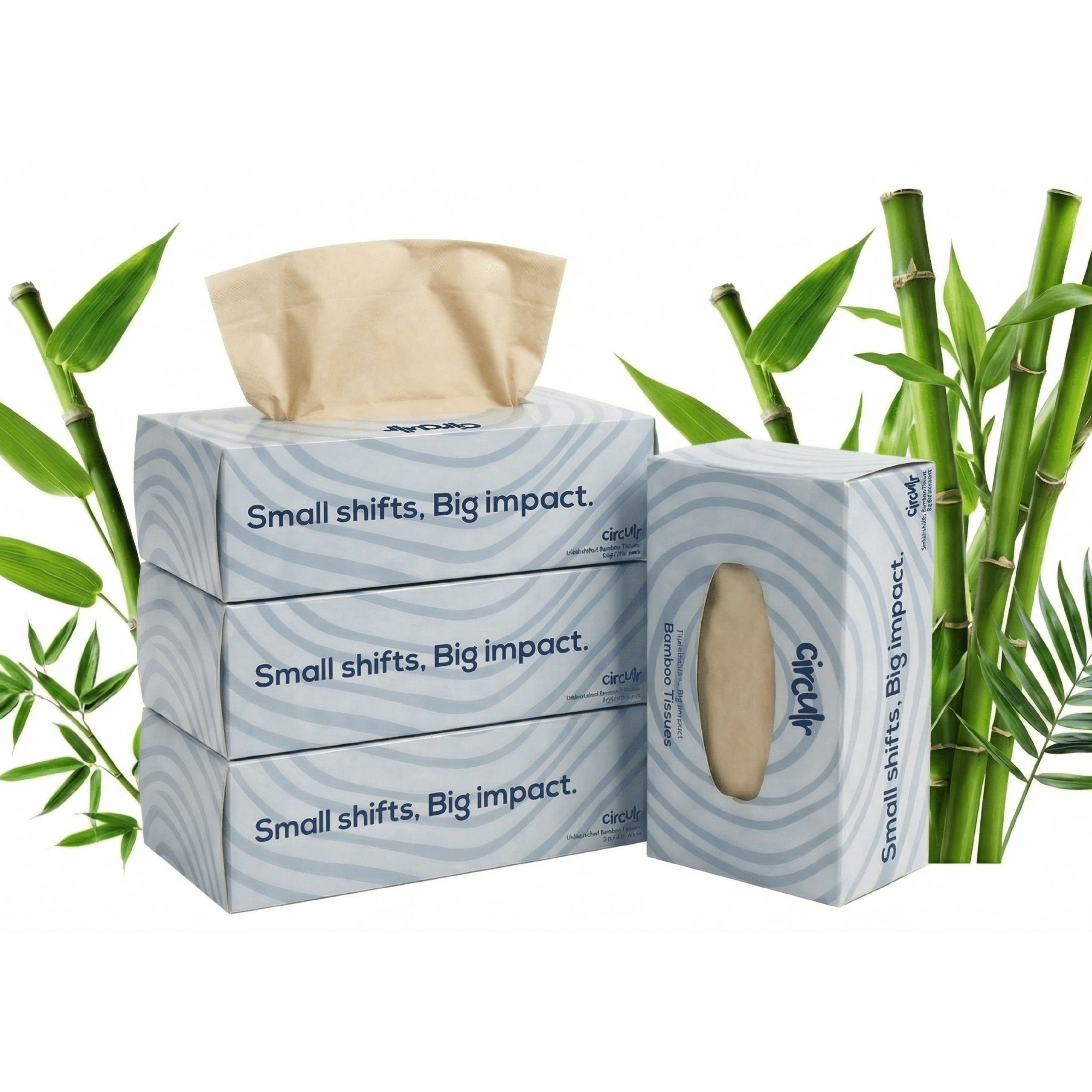
At Circulr, we prioritise bamboo products with traceable Indian sourcing and verified sustainability credentials — because where your bamboo comes from is as important as what it replaces. Explore our range and invest in India’s green gold today.